







GAGRA (Gauge Theories and Gravity)
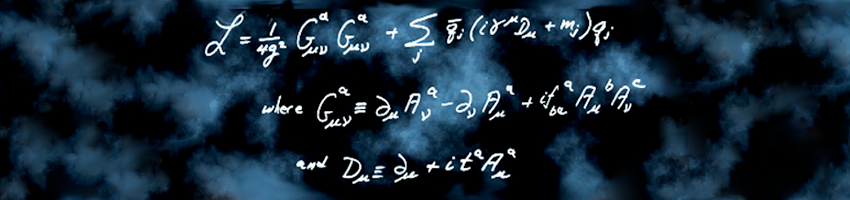
GAGRA is an INFN national specific initiative whose aim is, among other ones, to employ new methods based on recent developments (M.Bochicchio [1,2,3]) for the understanding of confining asymptotically free gauge theories - specifically of the ’t Hooft large-N limit of QCD - and for the consistent quantization of gravity (D.Anselmi [4,5,6]) that do not rely either on the simplifications furnished by the supersymmetry or on the superstring unification of all the interactions respectively.
A key role in the development of the aforementioned methods is played by the high-energy features of both large-N QCD (M.Bochicchio [1,3]) or, more generally, asymptotically free gauge theories, and of gravity (D.Anselmi [4,5]), mostly in relation to the non-perturbative (M.Bochicchio [1,3], M.Papinutto [7], D.Anselmi [4,6], F.Scardino) and perturbative (M.Becchetti [8], A.Quadri [9]) renormalization properties of the S-matrix amplitudes and correlators.
Moreover, complementary - but crucial - aims are the exploration of the non-perturbative low-energy features of QCD by lattice gauge theories (M.Papinutto, F.Russo) and QCD phenomenology (A.Polosa [10], A.Pilloni [10]) and, on the gravity side, the experimental search for dark matter (A.Polosa [11]).
References[1] M. Bochicchio, The large-N Yang-Mills S matrix is ultraviolet finite, but the large-N QCD S matrix is only renormalizable, Phys. Rev. D 95 (2017) 054010, arXiv:1701.07833 [hep-th].
[2] M. Bochicchio, Renormalization in large-N QCD is incompatible with open/closed string duality, Phys. Lett. B 783 (2018) 341, arXiv:1703.10176 [hep-th].
[3] M. Bochicchio, An Asymptotic Solution of Large-N QCD, for the Glueball and Meson Spectrum and the Collinear S-Matrix, In: Proceedings, 16th International Conference on Hadron Spectroscopy (Hadron 2015), AIP Conf. Proc. 1735 (2016) 030004.
[4] D. Anselmi, On the quantum field theory of the gravitational interactions, JHEP 06 (2017) 086, arXiv: 1704.07728 [hep-th], and 17A3 Renormalization.com.
[5] D. Anselmi and M. Piva, The ultraviolet behavior of quantum gravity, JHEP 05 (2018) 27, arXiv:1803.07777 [hep-th], and 18A2 Renormalization.com.
[6] D. Anselmi, Fakeons, microcausality and the classical limit of quantum gravity, Class. and Quantum Grav. 36 (2019) 065010, arXiv:1809.05037 [hep-th], and 18A4 Renormalization.com.
[7] P. Dimopoulos, G. Herdoiza, M. Papinutto, C. Pena, D. Preti, A. Vladikas, Non-Perturbative Renormalisation and Running of BSM Four-Quark Operators in Nf = 2 QCD, Eur. Phys. J. C 78 (2018) 579, arXiv:1801.09455 [hep-lat].
[8] M. Becchetti and R. Bonciani, Two-Loop Master Integrals for the Planar QCD Massive Corrections to Di-photon and Di-jet Hadro-production, JHEP 1801 (2018) 048, arXiv:1712.02537 [hep-ph].
[9] D. Binosi, A. Quadri, Off-shell renormalization in the presence of dimension 6 derivative operators. II. UV coefficients, JHEP 2005 (2020) 141, arXiv:1904.06693.
[10] A. Esposito, A. Pilloni, A. D. Polosa, Multiquark Resonances, Phys. Rep. 668 (2017) 1.
[11] A. Caputo, A. Esposito, E. Geoffray, A. D. Polosa, S. Sun, Dark Matter, Dark Photon and Superfluid He-4 from Effective Field Theory, Phys. Lett. B 802 (2020) 135258.
Websites:
- National INFN website of GAGRA: under construction.
Thesis Opportunities:
For information regarding thesis opportunities, please contact: Marco Bochicchio, Mauro Papinutto and Antonio Davide Polosa.
Local Coordinator
Marco Bochicchio| Name | Surname | Role | Position |
|---|---|---|---|
| Marco | Bochicchio | Dipendente | Primo Ricercatore |
| Mauro | Papinutto | Associato | Prof. Associato |
| Alessandro | Pilloni | Associato | Fellini Fellow |
| Antonio Davide | Polosa | Associato | Prof. Ordinario |
| Francesco | Scardino | Associato | Dottorando |